
PORTABLE TOILET RESOURCE
Where Should Portable Toilets Be Placed
Practical information from Myers Portable Toilets to help you understand rental options, planning considerations, and what to confirm with an independent provider.
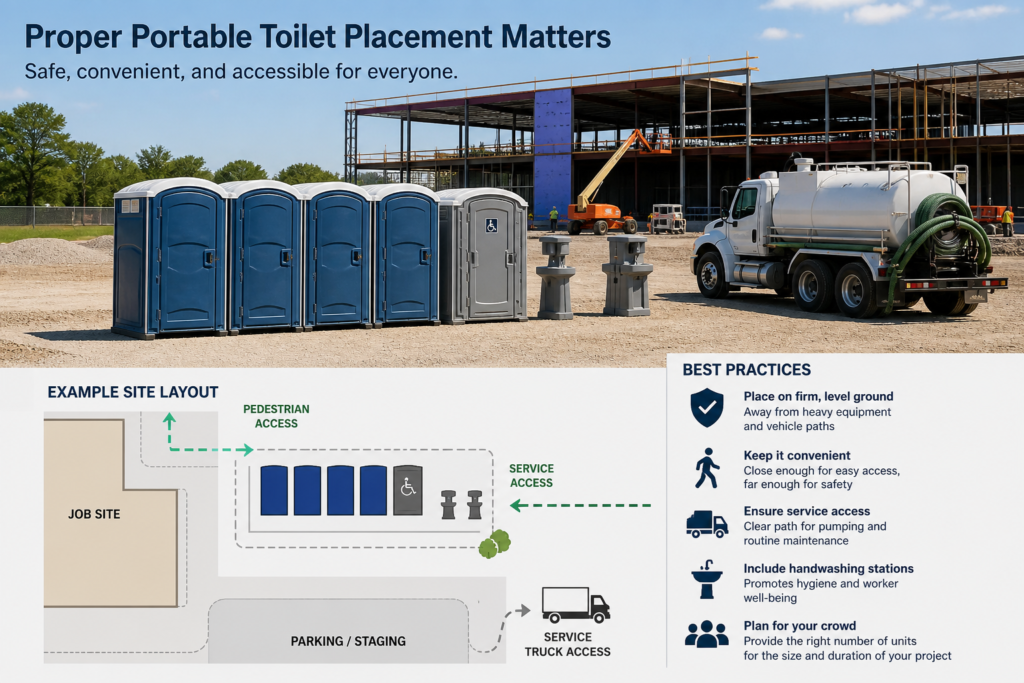
Portable toilets should generally be placed on level, stable ground where users can reach them safely and the rental provider can deliver, service and remove them. Good placement also considers drainage, wind exposure, pedestrian routes, accessibility needs and separation from vehicle or heavy-equipment traffic.

Level, Stable Ground
Units need a flat, firm surface to sit securely and avoid tipping or shifting. Soft ground, slopes, or uneven surfaces can make units unstable, especially as they’re used throughout an event or project and after rain softens unprotected soil.
Truck Access for Delivery and Servicing
The placement location needs to be reachable by the delivery vehicle, both for initial setup and for any servicing during longer rentals. A spot that looks convenient for guests but is difficult for a truck to reach can complicate delivery, servicing, and pickup. See Portable Toilet Delivery and Pickup Explained for more on how access affects the delivery and pickup process.
Reasonable Distance From the Main Activity Area
Units should be close enough to be convenient without being so close that odor or foot traffic becomes disruptive to the main event or work area. Balancing accessibility with a sensible buffer distance is generally more about practical convenience than a fixed rule.
Accessibility Considerations
Any accessible units should be placed on a path that’s reasonably navigable, avoiding steps, deep gravel, or soft ground that could make it difficult to reach for someone using a mobility device. This is worth planning for from the start rather than adjusting after units are already delivered.
Shade and Weather Exposure
Placing units in partial shade can make them more comfortable to use during warm weather, and avoiding low-lying areas that collect water can prevent problems if it rains during the rental period. Since ground and weather conditions vary by site and season, discussing your specific location with the provider ahead of delivery is the most reliable way to choose a spot that holds up for your particular event or project.
Local Placement Rules
Some venues, municipalities, or property managers have their own requirements about where portable toilets can be placed, such as distance from property lines or water sources. Checking with your venue or local authority ahead of time can help you avoid needing to relocate units after delivery.
For a broader overview of portable toilet rental, see the Portable Toilet Rental Guide.
Protect the Units From Traffic and Changing Site Conditions
Avoid placing portable toilets where vehicles, forklifts or heavy equipment could strike them or block safe pedestrian access. Ground that is firm at delivery can soften after rain, so drainage and changing site conditions matter. If additional stabilization or anchoring is appropriate because of weather or site exposure, follow the rental provider’s instructions rather than improvising a tie-down method.
Plan Accessible Routes Along With Accessible Units
When accessible portable toilets are provided, consider the route to the unit and the usable area around it—not just the unit itself. Applicable accessibility requirements can vary by setting, so confirm site-specific requirements for public events, venues or other regulated locations.
Need Portable Toilet Rental Help?
Call to discuss your rental needs and confirm unit options, pricing, delivery, servicing, availability, and provider requirements directly.
Referral Disclosure: Myers Portable Toilets is a referral-style informational website. We may help callers connect with independent service providers. We do not perform portable toilet rental or servicing ourselves. Pricing, availability, delivery schedules, servicing, provider capabilities, and rental terms may vary. Always confirm details directly before scheduling service.